Darkest Dungeon II Relationships: Affinity Explained
Master Darkest Dungeon II relationships with affinity thresholds, Inn item tips, and Blessed and Cursed skill mechanics to keep the party working together.
Jump to
How Affinity Creates Relationships
Darkest Dungeon II relationships turn each hero pair’s affinity into a chance of gaining combat bonuses or penalties when you leave an Inn. Raise affinity with Inn Items, supportive actions, and shared decisions to improve those odds. Positive bonds add optional Blessed skills; negative bonds force Cursed skills into your loadout.
Each pair tracks affinity separately on a 0–20 scale, starting at 9. A full four-hero party has six pairs, so keeping two favorite heroes friendly only covers part of the team.
| Affinity | Standing | Base relationship chance |
|---|---|---|
| 0 | Zero Affinity | 90% negative |
| 1–4 | Very Unfriendly | 65% negative |
| 5–8 | Unfriendly | 33% negative |
| 9–13 | Neutral | 5% negative; 5% positive |
| 14–16 | Friendly | 33% positive |
| 17–19 | Very Friendly | 65% positive |
| 20 | Max Affinity | 90% positive |
Thresholds matter more than individual points within a band. Moving a pair from 8 to 9 lowers its base negative relationship chance from 33% to 5%. Moving from 13 to 14 raises its base positive chance from 5% to 33%.
Quirks and other modifiers affect the final odds. The first Inn also applies a −10% modifier to both positive and negative relationship chances. Inspect each pair’s displayed percentages before departing; even maximum affinity does not guarantee a positive bond.
Official page: Darkest Dungeon II (darkestdungeon.com)
What Blessed and Cursed Skills Change
When you embark, reveal each relationship and inspect the affected skills before the next fight. Relationship effects attach to particular skills, which can change how you use an otherwise familiar loadout.
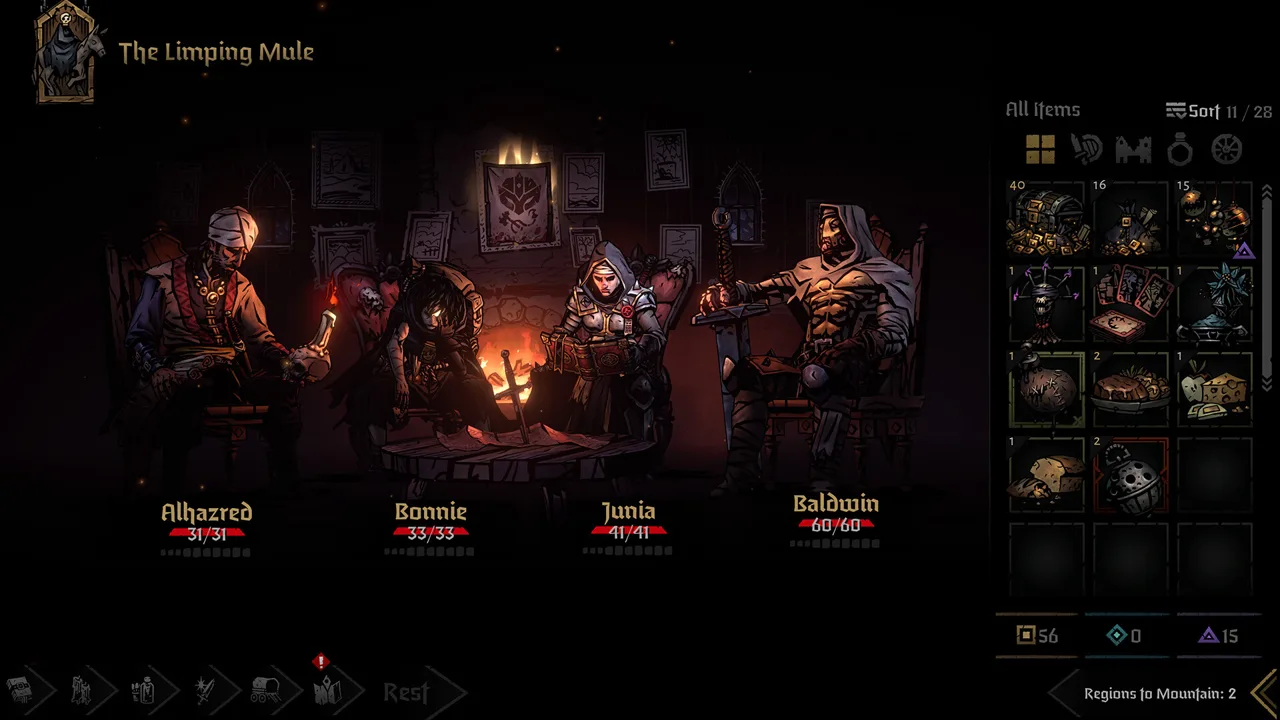 Image: Steam / Red Hook Studios
Positive relationships
A Blessed skill gives its user’s relationship partner an additional benefit when used. Equipping it is optional, so weigh that benefit against the skill’s normal role, rank requirements, and place in your rotation.
The three positive relationships are:
- Respectful: Can produce follow-up attacks and retaliation against enemies attacking the partner.
- Hopeful: Includes stress relief and supportive effects.
- Amorous: Includes healing and occasional interception of attacks aimed at the partner.
For example, a damage skill that also heals its user’s partner can support your tank while maintaining pressure on an enemy. Equip that skill when both its normal action and its relationship benefit serve your plan.
Negative relationships
The four negative relationships are Suspicious, Envious, Hateful, and Resentful. They attach penalties to Cursed skills and can trigger disruptive behavior. Hateful, for example, can cause a hero to damage their partner during an attack.
Cursed skills are automatically equipped and cannot be removed. They occupy skill slots, but you still choose whether to use them during combat.
After a negative relationship forms, check which skills were displaced. Restore any essential skills that still fit, then inspect exactly what each curse does to its partner. Plan around the actual penalty rather than abandoning the run over the relationship’s name.
Build Affinity Through Combat and Stress Control
Supportive actions can produce affinity gains, although individual gains are random. Low stress improves the chance of positive interactions; high stress increases the chance of negative ones.
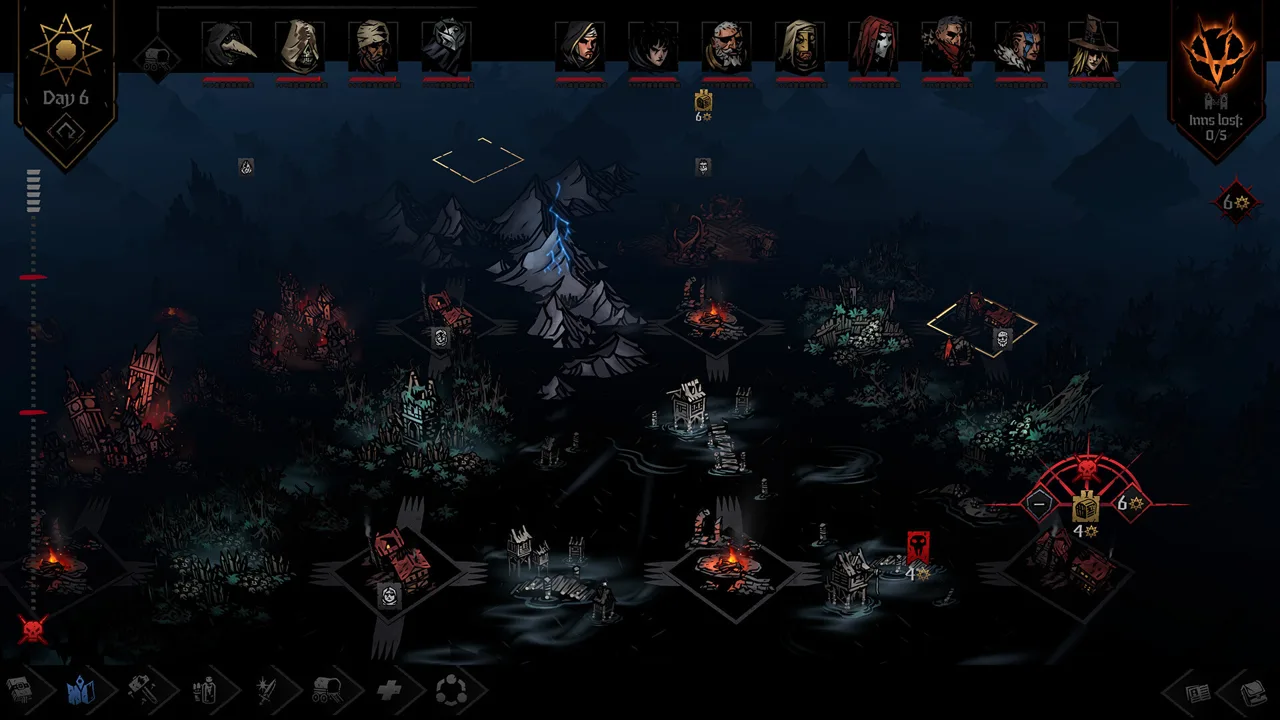 Image: Steam / Red Hook Studios
Actions that can build affinity include:
- Buffing allies with skills or combat items.
- Healing allies who have low HP or are on Death’s Door.
- Reducing an ally’s stress.
- Guarding an ally who has low HP or is on Death’s Door.
- Moving or using movement skills while stress is low.
Consecutive actions also create opportunities. Heroes can gain affinity by attacking the same enemy in succession, following up on an ally’s debuff or Combo, or attacking an enemy immediately after it attacks an ally.
Use those opportunities when they fit the fight. Finish a dangerous enemy or deliver an urgent heal before chasing a random affinity gain.
Watch for the blue affinity-loss indicator when choosing actions. A wounded or highly stressed hero can react badly when another ally receives healing, guarding, or stress relief. Preview different targets when you have a viable choice, while keeping immediate survival the priority.
Weigh Hero Preferences at Nodes
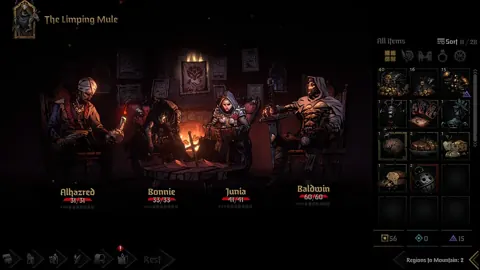
Node decisions affect relationships between heroes who agree or disagree:
 Image: Steam / Red Hook Studios
- Heroes sharing the same or similar decision gain +1 affinity.
- Heroes taking opposing positions lose 1–2 affinity.
Inspect the party’s preferences before committing. A disagreement can push a pair from 9 into the 5–8 band, increasing its base negative relationship chance from 5% to 33%.
Choose agreement when the encounter and rewards still suit your expedition. Accept an affinity loss when the alternative threatens the run, then reserve Inn supplies for the affected pair.
Use Inn Items Around Affinity Thresholds
Inn Items give you direct control over which relationships receive attention. Some affect one pair; others affect the entire party. Many can also lower affinity, so inspect the downside before using them near a threshold.
| Inn Item | Affinity coverage | Affinity outcome |
|---|---|---|
| Roast Pig | All hero pairs | Positive affinity gain |
| The Wine | Selected pair | Positive affinity gain |
| Playing cards | Party | 75% increase chance; 25% decrease chance |
| Whiskey Bottle | Selected pair | 67% increase chance; 33% decrease chance |
| Whiskey Barrel | Party | 75% increase chance; 25% decrease chance |
Roast Pig also reduces stress and can be used alongside normal food. The Wine combines affinity improvement with stress reduction for its two targets.
Affinity gains from Inn Items have a 10% chance to crit, doubling the points gained. Treat that as a bonus; budget your supplies around the normal result.
Use this order when preparing to leave:
- Inspect all six pairs. Identify low-affinity pairs and those close to the next positive threshold.
- Check item restrictions and Quirks. Make sure the intended heroes can participate.
- Keep dependable gains available when using risky items. Leave yourself a way to repair a bad roll.
- Recheck after each use. A normal gain or crit can change where your remaining supplies matter.
- Review the final relationship odds before embarking.
Be especially careful with party-wide items when everyone starts at 9. A single lost point puts an affected pair into the 33% negative band.
When supplies are limited, prioritize endangered pairs before improving already friendly ones. Then target the positive thresholds at 14, 17, and 20 rather than spreading points evenly across the party.
Relationship Duration in Confessions and Kingdoms
In Confessions, relationships last for one region. Raising affinity during that region improves your position for a later relationship roll; it does not immediately remove an existing curse.
Use the remaining journey to rebuild a damaged pair’s affinity, then prepare at the next Inn. A negative relationship does not have to follow you through the entire expedition.
In Kingdoms, relationships last for five days. When a positive relationship ends, the pair loses 3 affinity. That loss applies even when the affected heroes are not at the current Inn.
Account for that drop when planning future pairings. A bond that has just expired leaves its heroes with less affinity for their next relationship opportunity.
Relationship Achievements to Plan Around
Several achievements give you specific relationship targets:
- Utopia: Enter the Mountain with a full party and all positive relationships.
- The Clash: Enter the Mountain with a full party and all negative relationships.
- Friends 'Til the End: Have the Highwayman and the Crusader form a positive relationship.
- It's Complicated: Have 8 heroes involved in relationships at the same time.
For Utopia, inspect every pair before the final departure toward the Mountain. One strong partnership is insufficient: all six pairs in the full party need positive relationships.
For Friends 'Til the End, direct pair-targeted affinity items toward the Highwayman and Crusader. Raising their affinity to 20 gives them a 90% base positive relationship chance, with the final percentage determined by applicable modifiers.
Continue with
 Darkest Dungeon II Altar of Hope: Unlocks and UpgradesLearn how the Darkest Dungeon II altar of hope works, where to spend Candles, and how to unlock heroes, items, Memories, cosmetics, and expedition options.
Continue exploring
Darkest Dungeon II Jester: Skills, Paths, and Builds
Master the Darkest Dungeon II jester with skill loadouts, path differences, stress healing, and Finale tips. Plan your party around Sarmenti's movement.
Darkest Dungeon II The Binding Blade: Complete Guide
Explore Darkest Dungeon II The Binding Blade, including the Duelist, Crusader unlock requirements, hero paths, and the Warlord. Plan your next expedition.
Join the community
Official channels for news, updates and player help: